Top 7 Private Cloud Consulting Companies for Regulated Industries (Healthcare, Finance & Government) — 2026

For many organizations, moving to the cloud is a practical business decision. But for companies operating in healthcare, financial services, SaaS, government, or other regulated sectors, cloud infrastructure decisions are rarely simple.
HIPAA, PCI-DSS, FedRAMP, SOC 2, GDPR, DORA, FINMA, LGPD, BSI C5, and similar frameworks create real requirements around data residency, access control, encryption, audit evidence, incident response, and third-party risk. Public cloud providers can support compliance, but they do not remove the organization’s own responsibility for secure and compliant architecture.

That is why many regulated organizations continue to evaluate private cloud, sovereign cloud, hosted private cloud, and hybrid cloud models. These approaches can offer stronger control over where data is hosted, how infrastructure is configured, who can access sensitive systems, and how evidence is produced during audits.
However, a private cloud is not automatically compliant. The outcome depends on the partner designing, implementing, documenting, and supporting the environment. A strong consulting partner needs to understand both infrastructure engineering and the compliance realities of regulated industries.
This list highlights seven private, sovereign, and regulated cloud consulting companies to consider in 2026. The companies were selected based on platform expertise, regional relevance, regulated-industry fit, cloud engineering depth, and ability to support organizations with strict data-control and compliance requirements.

1. StackOverdrive


Best for: Organizations that need private cloud infrastructure with strong DevOps, Kubernetes, automation, and infrastructure-as-code practices.
Key verticals: SaaS, fintech, healthcare, technology companies, regulated digital businesses
Key platforms: OpenStack, OpenShift, Nutanix, Kubernetes
Relevant strengths: Private cloud architecture, on-premises deployment, infrastructure automation, data-control requirements, CI/CD integration
Overview
| 01

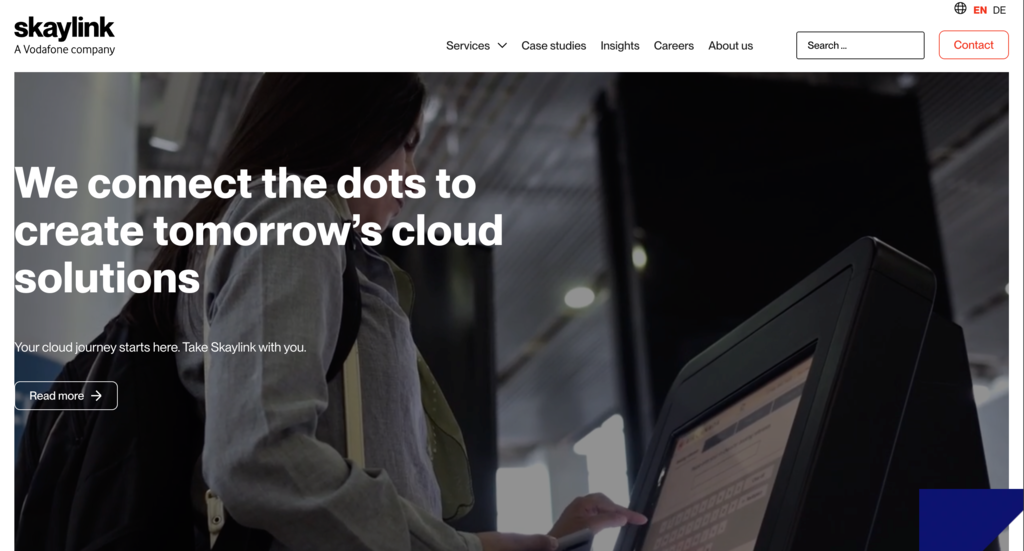
Many cloud consultancies begin with a preferred hyperscaler and then shape the solution around that ecosystem. StackOverdrive takes a more infrastructure-first approach. For organizations that need stronger control over hosting, deployment models, and operational processes, this can make them a strong fit for private cloud and regulated infrastructure projects.

Their private cloud consulting work covers platform selection, architecture planning, infrastructure deployment, automation, and DevOps integration. This is especially useful for organizations that do not simply need infrastructure to exist, but need it to be reproducible, documented, and maintainable over time.

For regulated teams, this matters because infrastructure decisions often need to be explainable. Configuration management, access control, deployment history, monitoring, and change tracking all become part of the broader compliance picture. StackOverdrive’s focus on infrastructure-as-code, automation, Kubernetes, CI/CD, and observability makes their approach relevant for organizations that want private cloud infrastructure their engineering teams can actually use.

Their platform experience includes OpenStack and OpenShift for organizations that want open-source or vendor-neutral environments, as well as Nutanix for teams looking for a more integrated private cloud model.

Pros
| 02
  • Strong private cloud and infrastructure engineering focus
  • Experience with OpenStack, OpenShift, Nutanix, and Kubernetes
  • DevOps-oriented approach that includes CI/CD, automation, and observability
  • Infrastructure-as-code practices can support better documentation and repeatability
  • Good fit for organizations that need more control than standard public cloud deployments provide
  • Platform selection can be based on technical and business requirements rather than a single vendor ecosystem
Cons
| 03
  • Best suited to organizations with meaningful infrastructure complexity
  • May not be the right fit for companies looking for a quick, lightweight cloud migration
  • Framework-specific compliance experience should be validated during discovery if the organization operates under strict audit requirements
Bottom Line
| 04

StackOverdrive is a strong choice for organizations that need private cloud infrastructure designed with modern DevOps practices from the beginning. For regulated organizations, they are especially relevant when the priority is infrastructure control, Kubernetes-native architecture, automation, reproducibility, and long-term operational maintainability.

2. Skaylink


Best for: Mid-to-large enterprises in Germany, Austria, Switzerland, and Northern Europe that need sovereign cloud strategy, regulated cloud operations, and strong regional compliance awareness.
Key verticals: Finance, insurance, healthcare, automotive, public sector
Key platforms: AWS, Microsoft Azure, Delos Cloud, VMware, Kubernetes
Relevant strengths: GDPR, BSI C5, NIS2 readiness, sovereign cloud models, DACH regulatory requirements
Overview
| 01

Skaylink is one of the most relevant cloud consulting companies for regulated organizations in the DACH region. Founded in 2020 through the combination of established German IT firms, the company has grown quickly and became part of Vodafone following its 2025 acquisition.

Its sovereign cloud practice is particularly relevant for organizations that want the benefits of modern cloud infrastructure without losing sight of data residency, local regulatory expectations, and European sovereignty concerns.

Skaylink works with major cloud platforms, including AWS and Microsoft Azure, and also partners with Delos Cloud for sovereign cloud use cases in Germany. This gives regulated organizations several deployment options depending on their requirements, whether they are focused on public cloud governance, sovereign cloud models, hybrid architectures, or managed infrastructure.

For financial services, insurance, healthcare, and public-sector organizations in Germany and nearby markets, Skaylink’s strength is its regional specialization. The company understands that regulated cloud is not just a technical project. It is also a legal, procurement, documentation, governance, and operational challenge.

Pros
| 02
  • Strong fit for German and DACH-region regulated organizations
  • Relevant sovereign cloud capabilities through Delos Cloud and hyperscaler partnerships
  • Strong Microsoft, AWS, and cloud-native expertise
  • Experience with regulated sectors such as finance, insurance, healthcare, and public sector
  • Recognized by ISG in cloud services categories
  • Backed by Vodafone after the 2025 acquisition
Cons
| 03
  • Shorter independent company history than older consultancies
  • Sovereign cloud approach may be more relevant for DACH organizations than global buyers
  • Some organizations may want to monitor how the Vodafone acquisition shapes Skaylink’s long-term strategy
  • Not the strongest fit for companies looking specifically for OpenStack-led or fully vendor-neutral private cloud
Bottom Line
| 04

Skaylink is a strong option for regulated organizations in Germany, Austria, Switzerland, and Northern Europe that need sovereign cloud strategy, cloud governance, and region-specific compliance awareness. It is especially relevant for enterprises that want a modern cloud environment while keeping data residency and European regulatory expectations central to the architecture.

3. VSHN


Best for: Fintech, insurtech, medtech, and SaaS organizations in Switzerland and the EU that need Kubernetes-native infrastructure with strong DevOps integration.
Key verticals: Fintech, insurtech, medtech, SaaS
Key platforms: Red Hat OpenShift, APPUiO, Kubernetes, multi-cloud
Relevant strengths: ISO 27001, ISAE 3402 Type 2, FINMA-aligned operational practices, GDPR-aware infrastructure
Overview
| 01

VSHN is one of Switzerland’s strongest Kubernetes and DevOps-focused cloud providers. The company is known for its deep cloud-native expertise, including Kubernetes, OpenShift, GitOps, automation, and managed platform operations.

VSHN’s flagship platform, APPUiO, is built around OpenShift and Kubernetes. This makes it especially relevant for regulated companies that want the flexibility of cloud-native infrastructure without giving up control over deployment standards, operational processes, and compliance documentation.

For fintech, insurtech, medtech, and SaaS organizations, VSHN’s value is the combination of engineering depth and compliance-aware operations. Their ISO 27001 certification and ISAE 3402 Type 2 audit provide independent assurance around their internal processes, while their experience with FINMA-related expectations makes them a strong option for Swiss financial and regulated digital businesses.

VSHN is not a traditional large consultancy. Its model is more engineering-led and platform-led. That can be an advantage for organizations that want direct technical expertise rather than a large advisory layer.

Pros
| 02
  • Strong Kubernetes and OpenShift expertise
  • APPUiO provides a mature platform option for cloud-native teams
  • ISO 27001 certified and ISAE 3402 Type 2 audited
  • Relevant for organizations working under FINMA expectations
  • Strong DevOps, GitOps, monitoring, and automation capabilities
  • Engineering-led culture with deep technical specialization
Cons
| 03
  • Smaller than large global consultancies
  • Strongest in Switzerland and nearby European markets
  • More focused on Kubernetes-managed environments than traditional on-premises private cloud
  • May not be the best option for organizations seeking large-scale global transformation consulting
Bottom Line
| 04

VSHN is a strong choice for Swiss and European fintech, insurtech, medtech, and SaaS organizations that need Kubernetes-native infrastructure with strong DevOps integration and independently verifiable operational controls. It is especially relevant for teams that want cloud-native velocity without ignoring regulated-industry requirements.

4. OVHcloud


Best for: European organizations in healthcare, financial services, public sector, and critical infrastructure that need hosted private cloud with strong regional compliance coverage.
Key verticals: Healthcare, financial services, public sector, critical infrastructure
Key platforms: Hosted Private Cloud, VMware, OpenStack, bare metal
Relevant strengths: HDS, PCI-DSS, SecNumCloud, BSI C5, GDPR, European data sovereignty
Overview
| 01

OVHcloud is one of Europe’s most important cloud providers for organizations that care about data sovereignty, hosted private cloud, and European jurisdiction. Unlike US-headquartered hyperscalers, OVHcloud is European-rooted, which makes it a natural consideration for organizations concerned about data residency, GDPR, sovereignty, and exposure to non-European legal frameworks.

Its hosted private cloud offering is especially relevant for organizations that want dedicated infrastructure and stronger isolation without building and operating everything themselves. This makes OVHcloud a practical option for healthcare providers, financial institutions, public-sector bodies, and other organizations that need a controlled infrastructure environment with strong compliance credentials.

OVHcloud has built a broad compliance portfolio across Europe, including healthcare data hosting certifications, PCI-DSS coverage, SecNumCloud qualification in France, and BSI C5 reports for Germany. This does not make every customer deployment automatically compliant, but it does provide a stronger infrastructure foundation for regulated workloads.

For organizations that need consulting-heavy implementation, OVHcloud often works through partners. This means the best fit is usually an enterprise or mid-market organization that wants a European-sovereign cloud foundation and can combine OVHcloud infrastructure with internal teams or a specialized consulting partner.

Pros
| 02
  • Strong European data sovereignty positioning
  • Hosted private cloud options for regulated workloads
  • Broad compliance portfolio across healthcare, finance, and public sector use cases
  • Relevant for organizations concerned with GDPR and European jurisdiction
  • VMware, OpenStack, bare metal, and dedicated infrastructure options
  • Strong fit for healthcare and financial services organizations in Europe
Cons
| 03
  • Consulting depth may depend on partner ecosystem rather than direct in-house professional services
  • Best suited to organizations with enough scale to benefit from hosted private cloud
  • Less relevant for companies that need fully on-premises private cloud
  • Buyers still need to design and operate their own workloads in a compliant way
Bottom Line
| 04

OVHcloud is a strong infrastructure choice for European regulated organizations that need hosted private cloud, data sovereignty, and compliance-ready infrastructure. It is especially relevant for healthcare, financial services, public-sector, and critical infrastructure organizations that want a European cloud provider rather than a US-headquartered hyperscaler.

5. Claranet


Best for: Mid-market and enterprise organizations that need managed private, hybrid, or multi-cloud services across multiple countries.
Key verticals: Financial services, healthcare, public sector, manufacturing, enterprise IT
Key platforms: VMware, AWS, Azure, Google Cloud, managed Kubernetes
Relevant strengths: GDPR, NIS2 readiness, ISO 27001, cybersecurity, multi-jurisdiction managed services
Overview
| 01

Claranet is one of Europe’s most established managed service providers. Founded in 1996, the company has expanded across multiple European markets and into Latin America, giving it a strong international footprint for organizations that need managed cloud services across jurisdictions.

For regulated organizations, Claranet’s biggest strength is not narrow specialization in one platform. It is breadth. The company combines cloud infrastructure, managed services, cybersecurity, and multi-cloud operations. This makes it useful for organizations that need ongoing cloud management, security operations, compliance support, and infrastructure modernization under one provider.

Claranet holds high-level partnerships across AWS, Microsoft Azure, and Google Cloud, while also supporting private and hybrid infrastructure environments. Its acquisition of CorpFlex in Brazil expanded its Latin American presence and strengthened its private cloud and managed services capabilities in that region.

This makes Claranet a good fit for organizations that want a practical managed cloud partner rather than a boutique private cloud specialist. It is especially relevant for companies operating across the UK, France, Germany, Iberia, and Latin America.

Pros
| 02
  • Long operating history compared with many cloud consultancies
  • Strong European footprint with additional Latin American presence
  • Broad managed cloud, cybersecurity, and infrastructure services
  • Supports AWS, Azure, Google Cloud, VMware, and managed Kubernetes environments
  • Good fit for mid-market and enterprise organizations
  • Useful for companies that need ongoing managed services, not only project-based consulting
Cons
| 03
  • Private cloud is one part of a broad services portfolio rather than the company’s only focus
  • Less specialized than pure-play OpenStack, Kubernetes, or sovereign cloud providers
  • Large service portfolio may require careful scoping to avoid unclear ownership
  • Best fit depends heavily on local country team capability
Bottom Line
| 04

Claranet is a strong option for regulated organizations that need managed private, hybrid, or multi-cloud services across Europe and Latin America. It is best suited to companies that want a long-term managed services partner with cloud, cybersecurity, and infrastructure capabilities under one roof.

6. Stefanini


Best for: Mid-to-large organizations in Latin America, especially banking, insurance, healthcare, and enterprise sectors, that need regional cloud expertise and managed transformation support.
Key verticals: Banking, insurance, healthcare, capital markets, enterprise IT, government
Key platforms: AWS, Azure, hybrid cloud, multi-cloud
Relevant strengths: LGPD, regional financial services requirements, cybersecurity, data governance, cloud modernization
Overview
| 01

Stefanini is a Brazilian multinational technology consultancy founded in 1987, with operations across many global markets. In Latin America, it is one of the most established technology partners for large organizations, including regulated sectors such as banking, insurance, healthcare, and government.

The company’s cloud capabilities became stronger in 2025 after its acquisition of a majority stake in Escala 24×7, a major AWS Premier Consulting Partner in Latin America. This added significant AWS expertise, cloud certifications, implementation experience, and regional cloud engineering capacity to Stefanini’s broader IT services portfolio.

For regulated organizations in Latin America, Stefanini’s advantage is regional context. Compliance and data governance requirements in Brazil and neighboring markets are not identical to those in the US or Europe. Organizations working under LGPD, regional banking rules, data residency expectations, and industry-specific controls often need a partner that understands the local environment.

Stefanini is strongest for cloud transformation, managed cloud, hybrid infrastructure, and AWS-led modernization. It is less of a pure private cloud specialist than some other companies on this list, but it is highly relevant for regulated organizations in Latin America that need cloud modernization with local expertise.

Pros
| 02
  • Strong Latin American presence and long enterprise IT history
  • Relevant experience with banking, insurance, healthcare, and government sectors
  • Escala 24×7 acquisition strengthened AWS cloud capabilities
  • Strong fit for LGPD-aware cloud modernization and regional compliance needs
  • Broad IT services portfolio, including cybersecurity and data governance
  • Suitable for mid-to-large organizations with complex transformation requirements
Cons
| 03
  • More focused on cloud transformation and managed cloud than pure private cloud
  • AWS-centric capabilities are stronger after the Escala 24×7 acquisition
  • Less relevant for organizations looking specifically for OpenStack or vendor-neutral private cloud
  • European compliance frameworks are not its strongest positioning compared with Europe-based providers`
Bottom Line
| 04

Stefanini is a strong option for Latin American regulated organizations that need cloud transformation, hybrid cloud, AWS expertise, and regional compliance awareness. It is particularly relevant for banking, insurance, healthcare, and enterprise organizations that need a partner with strong local presence and institutional knowledge.

7. Qim info


Best for: Swiss mid-market organizations exploring sovereign cloud, data residency, and compliance-aware cloud architecture.
Key verticals: Financial services, healthcare, public sector, Swiss enterprises
Key platforms: Sovereign cloud architectures, cloud strategy, DevOps, Kubernetes-oriented environments
Relevant strengths: Swiss data protection, GDPR, sovereign cloud strategy, US CLOUD Act awareness

Overview
| 01

Qim info is a Swiss IT consultancy with a strong local presence and published expertise around sovereign cloud. For Swiss organizations, this is an increasingly important topic. Data residency, Swiss data protection law, GDPR, vendor jurisdiction, and exposure to extraterritorial legislation such as the US CLOUD Act are now board-level concerns for many regulated companies.

Qim info’s relevance comes from its consultancy-led approach. Rather than positioning one platform as the answer, its sovereign cloud perspective starts with legal, operational, and data-control questions. This can be useful for Swiss organizations that are still deciding whether they need public cloud, private cloud, sovereign cloud, hybrid infrastructure, or a combination of these models.

Compared with larger providers, Qim info is likely to be more accessible for mid-market organizations that want strategic support without entering a large enterprise procurement process. It can be a good fit for Swiss companies that need help evaluating their cloud architecture through the lens of sovereignty, data protection, and operational control.

Because Qim info is smaller and less publicly documented than some larger providers, buyers should validate specific regulated-industry experience during procurement. This includes asking about previous work with FINMA-related requirements, healthcare data, public-sector requirements, audit documentation, and cloud security controls.

Pros
| 02
  • wiss-native consultancy with strong local relevance
  • Published expertise around sovereign cloud and data jurisdiction
  • Good fit for mid-market organizations exploring sovereignty-led cloud strategy
  • Useful for companies concerned about GDPR, Swiss data protection, and US CLOUD Act exposure
  • Consultancy-led approach rather than a fixed product-led model
  • More accessible than large global consultancies for some Swiss organizations
Cons
| 03
  • Smaller firm compared with larger European cloud providers
  • Less public evidence of large-scale regulated cloud deployments
  • Buyers should validate framework-specific experience during discovery
  • Primarily relevant for Switzerland and nearby markets
  • May not be the best fit for complex multi-region enterprise deployments
Bottom Line
| 04

Qim info is a relevant option for Swiss organizations that need sovereign cloud advisory, data-residency strategy, and compliance-aware cloud architecture. It is best suited to mid-market companies that want a local Swiss consulting partner and are prepared to validate specific regulated-industry experience during the selection process

Quick Comparison Table

Company
Best Fit
Key Compliance / Governance Focus
Region
Engagement Fit
StackOverdrive
DevOps-led private cloud
Data control, on-prem/private infrastructure, automation, audit-friendly infrastructure practices
Global
Mid-market to enterprise
Skaylink
Sovereign cloud in DACH
GDPR, BSI C5, NIS2 readiness, sovereign cloud models
DACH / Northern Europe
Mid-to-large enterprise
VSHN
Kubernetes-native regulated cloud
ISO 27001, ISAE 3402 Type 2, FINMA-aligned practices, GDPR
Switzerland / EU
SME to mid-enterprise
OVHcloud
Hosted private cloud and EU sovereignty
HDS, PCI-DSS, SecNumCloud, BSI C5, GDPR
Europe
Mid-market to enterprise
Claranet
Canada
GDPR, NIS2 readiness, ISO 27001, cybersecurity
Europe + Latin America
Mid-market to enterprise
Stefanini
Regulated cloud transformation in LATAM
LGPD, regional financial rules, cybersecurity, data governance
Latin America / global
Mid-to-large enterprise
Qim info
Swiss sovereign cloud advisory
Swiss data protection, GDPR, data residency, US CLOUD Act awareness
Switzerland
SME to mid-market

5 Questions to Ask Any Private Cloud Consulting Partner Before You Sign

1. "Can you show us a deployment that went through an audit — and passed?"
| 01

 Compliance-aligned architecture and audit-proven architecture are different things. Ask for a case study that includes the audit outcome, not just the deployment methodology. The best consultancies can describe the specific technical controls that satisfied a specific auditor, not just a generic compliance framework mapping.

2. "How do you document infrastructure-as-code for compliance evidence?"
| 02

 In regulated environments, your infrastructure needs to produce an audit trail. Ask how the consultancy approaches configuration management, change tracking, and the generation of compliance evidence from your infrastructure tooling. If the answer is vague, the deployment will be too.

3. "Which frameworks have your engineers actually worked within — not just studied?"
| 03

 GDPR, FINMA, and LGPD each have specific technical control requirements that look different in practice than they do in a framework document. Ask which specific frameworks the engineers assigned to your engagement have delivered against in previous roles.

4. "What happens when a zero-day hits our private cloud platform?"
| 04

Your private cloud is as secure as your patch management process. Ask how the consultancy approaches vulnerability response for private cloud platforms — who monitors CVEs, what the response SLA is, and whether managed support is available post-deployment.

5. "How does this integrate with our existing compliance tooling?"
| 05

Most regulated organizations already have SIEM, log management, and audit reporting infrastructure. Your private cloud needs to feed those systems — not replace them. A good consultancy will design the integration from day one rather than treating it as a post-deployment task

Scroll To Top Icon

back to top