
Hands-on Kubernetes expertise for platform architecture, application migration, security, reliability, automation, and day-two operations.
StackOverdrive helps engineering teams build production-ready Kubernetes across AWS, Google Cloud, Azure, hybrid, and on-premises environments. Start with a new platform, a migration goal, or a production problem that needs a practical solution.
We begin with the workload, team, and business requirement before recommending tools. Kubernetes may be a strong fit when you need to:
For a smaller or operationally simple application, a managed container service may be the better answer. Our role is to recommend the lowest-complexity platform that meets the requirement.
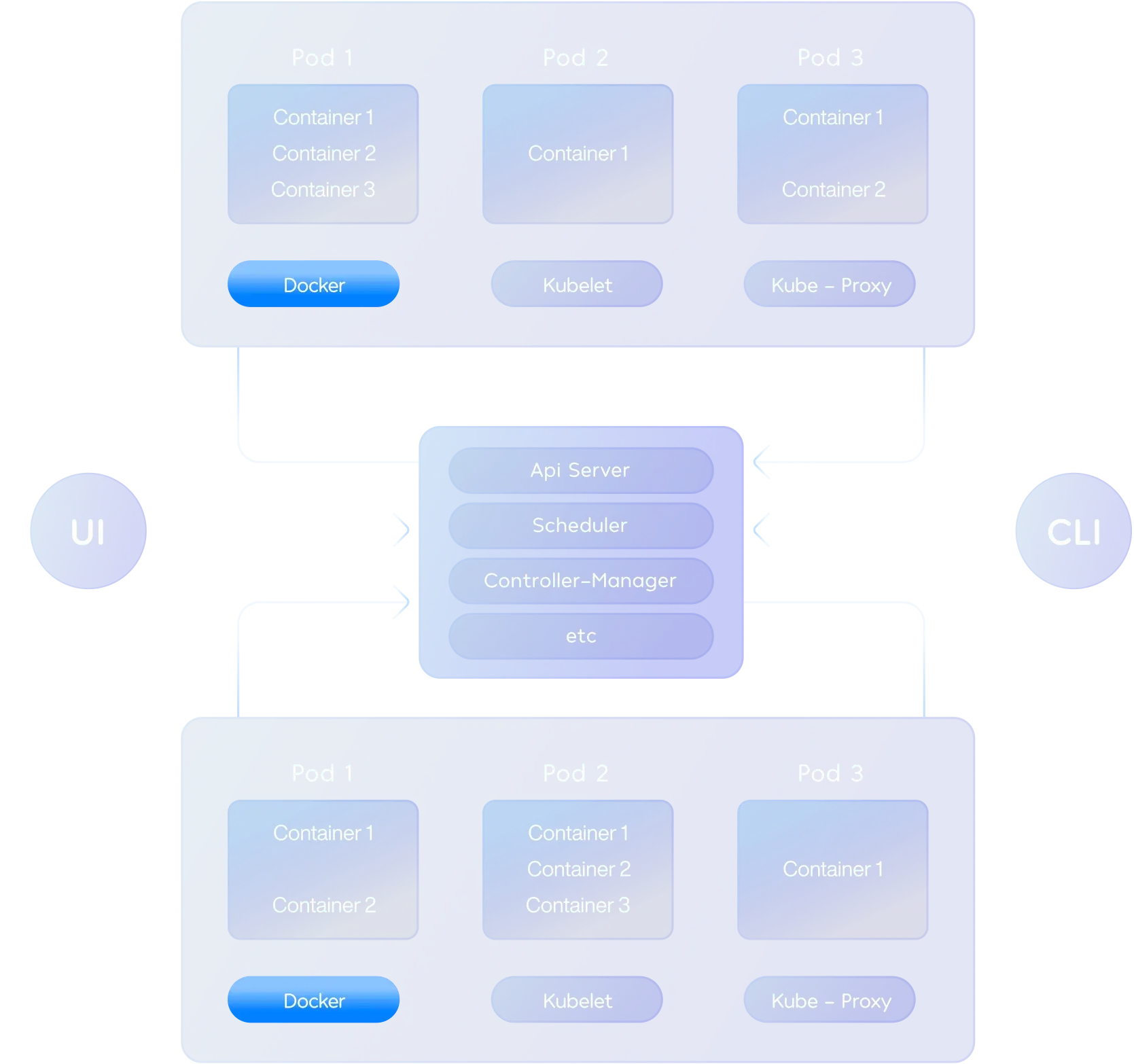
A cluster is only one part of a usable platform. We connect infrastructure, delivery, security, runtime behavior, observability, and ownership so the system works as a whole.
Start with a cluster review, architecture decision, migration, production incident, or operations gap. We will help define the right scope.
A useful Kubernetes audit does more than list configuration issues. It connects each gap to reliability, delivery, security, cost, recovery, and ownership.
You receive prioritized findings, dependencies, recommended actions, and a path from immediate risk reduction to longer-term platform improvement.
Use StackOverdrive for a focused decision, hands-on implementation, embedded engineering, or ongoing Kubernetes operations.
A global insurance platform needed container parity, mature CI/CD, multi-region resilience, access controls, and support for international requirements. StackOverdrive built Kubernetes infrastructure on AWS with automated provisioning, delivery, monitoring, and regional environments.
The engineering team could build, test, deploy, and monitor applications without managing the underlying machines. New regional infrastructure, including a Kubernetes cluster and supporting services, could be created in less than an hour.
Kubernetes consulting helps organizations plan, build, migrate, secure, scale, and operate container platforms. It can cover strategy and architecture as well as hands-on implementation, application delivery, troubleshooting, optimization, and team enablement.
Container orchestration consulting focuses on how containerized applications are deployed, scheduled, networked, scaled, secured, and operated across clusters. Kubernetes is the main platform we use alongside cloud infrastructure, delivery, and observability tooling.
Yes. We can move from architecture and platform selection into cluster provisioning, networking, storage, security, GitOps, CI/CD, observability, validation, documentation, and knowledge transfer.
Yes. StackOverdrive works with managed Kubernetes on AWS, Google Cloud, and Azure, as well as hybrid and on-premises environments. The right platform depends on workloads, integrations, team model, compliance needs, and cloud strategy.
Yes. A migration can include application assessment, containerization, dependency mapping, manifests or Helm charts, data and storage planning, CI/CD, progressive rollout, rollback, observability, and production transition.
We review workload requests and limits, node pools, scheduling, quotas, utilization, horizontal and vertical autoscaling, cluster autoscaling, and workload behavior. Recommendations are checked against performance and reliability requirements before implementation.
⌄
A security engagement can cover RBAC, workload identity, network policies, pod security, admission controls, secrets, image practices, vulnerability management, audit logging, supply-chain controls, and operational response.
Yes. Ongoing support can include monitoring, incident response, upgrades, patching, recovery planning, capacity and cost review, security improvements, platform maintenance, and operational documentation.
Talk to our Kubernetes engineers and accelerate your cloud-native journey.

back to top